Maanation Logo
    • Advanced Search
  • Guest
    • Login
    • Register
    • Night mode
Anuja Cover Image
User Image
Drag to reposition cover
Anuja Profile Picture
Anuja
  • Timeline
  • Groups
  • Likes
  • Friends
  • Photos
  • Videos
Anuja profile picture
Anuja
30 week ago

Potassium 2-Ethylhexanoate Market – Innovation & Sustainability
Report Overview:

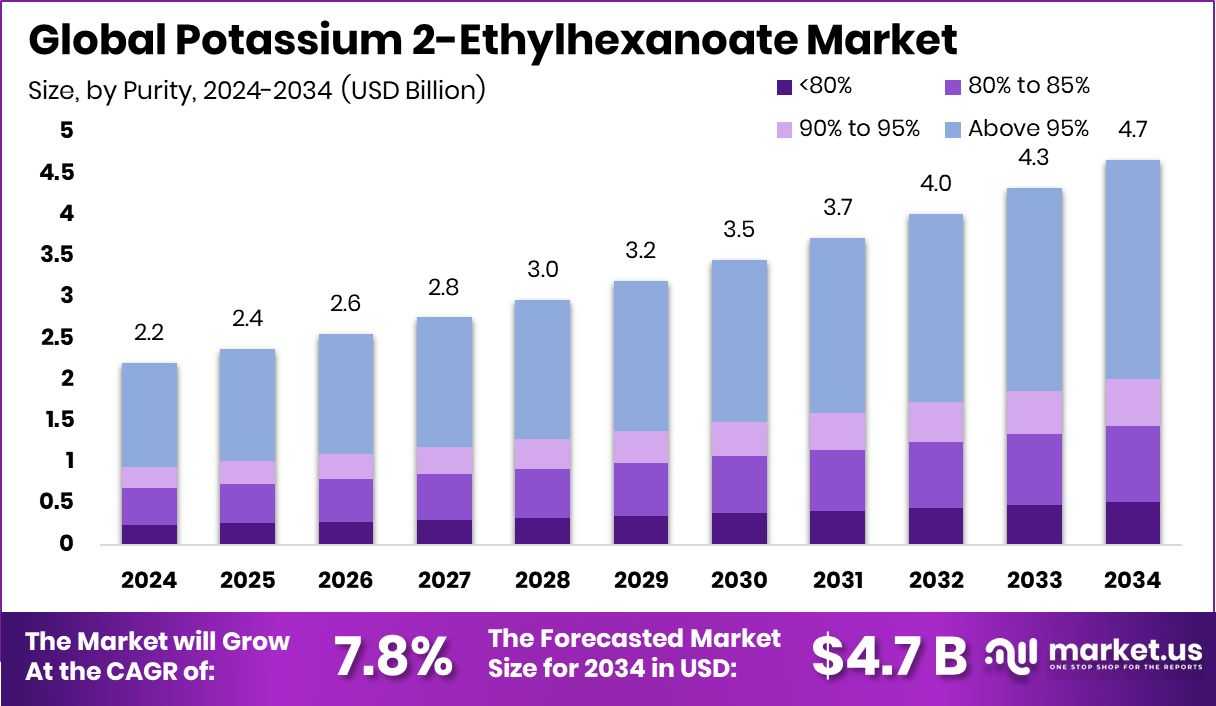
The global Potassium 2-Ethylhexanoate market is projected to grow from approximately USD 2.2 billion in 2024 to nearly USD 4.7 billion by 2034, reflecting a strong CAGR of 7.8% during the forecast period (2025–2034). Asia-Pacific currently dominates the market, accounting for about 47.4% of global share, with a value reaching USD 1.04 billion. This growth is driven by rising demand across industrial applications, especially in the construction and chemical sectors.

The global Potassium 2-Ethylhexanoate market is witnessing consistent growth, driven by rising demand in coatings, construction, and chemical processing industries. This compound, a potassium salt of 2-ethylhexanoic acid, is widely used as a catalyst in polyurethane production and driers in alkyd-based paints. Its chemical stability and performance advantages make it a preferred additive across multiple industrial applications.

Key Takeaways:

Global Potassium 2-Ethylhexanoate Market is expected to be worth around USD 4.7 billion by 2034, up from USD 2.2 billion in 2024, and grow at a CAGR of 7.8% from 2025 to 2034.
Potassium 2-Ethylhexanoate with above 95% purity dominates, holding 57.5% of its market segment.
In solution form, Potassium 2-Ethylhexanoate constitutes 67.4% of the market, preferred for easier application.
Paints and coatings utilize Potassium 2-Ethylhexanoate extensively, making up 36.9% of its applications.
Strong demand in Asia-Pacific boosts Potassium 2-Ethylhexanoate Market to 47.4% share.

Download Exclusive Sample Of This Premium Report:

https://market.us/report/globa....l-potassium-2-ethylh

Key Market Segments:

By Purity
<80%
80% to 85%
90% to 95%
Above 95%
By Form
Powder
Solution
By Application
Paints and Coatings
Adhesives and Sealants
Plastics
Rubber
Metalworking Fluids
Others
Drivers

A key driver behind the market’s growth is the increasing use of potassium 2-ethylhexanoate in polyurethane and alkyd resin production. As industries seek efficient, low-toxicity catalysts, this compound meets regulatory and performance standards. Rapid industrialization in emerging economies and rising demand for corrosion-resistant coatings in automotive and construction sectors also play a major role in market expansion.

Restraining Factors

The market faces limitations from raw material price volatility and environmental concerns tied to metal-based driers. While potassium-based compounds are seen as safer, regulatory shifts in certain countries toward completely bio-based or non-metallic catalysts could pressure this segment. Additionally, smaller manufacturers may struggle to adapt to increasingly complex compliance and safety protocols, affecting supply stability in some regions.

Opportunities

There is strong opportunity in developing eco-friendly and high-performance coatings, where potassium 2-ethylhexanoate is used as a safer alternative to traditional heavy-metal-based driers. Growth in green building materials, stricter VOC emission standards, and innovations in low-temperature curing systems create fertile ground for product evolution. Expanding applications in adhesives and sealants offer new revenue streams, especially in the Asia-Pacific and Middle East regions.

Trends

Sustainability and performance are shaping market trends. Manufacturers are developing hybrid and water-borne formulations incorporating potassium 2-ethylhexanoate to align with eco-conscious consumer demands. There’s growing interest in replacing cobalt-based compounds with potassium alternatives in coatings. Digital innovation in formulation and real-time quality control is improving efficiency, while regional investment in R&D is boosting local production capabilities.

Market Key Players:
Milliken & Company
Glindia Chemicals
American Elements
Haihang Industry Co.,Ltd.
Shandong Lanhai Industry Co., Ltd
ADEG S.R.L.
Ferguson Chemicals
Ningbo Inno Pharmchem Co.,Ltd.
Mofan Polyurethane Co., Ltd.
SincereChemical
Ivy Fine Chemicals
Ronak Chemicals
Actylis
Nihon Kagaku Sangyo Co., Ltd.
Other Key Players
Conclusion

The Potassium 2-Ethylhexanoate market is on a strong growth trajectory, driven by its wide use in coatings, catalysts, and resins. As industries demand safer and more sustainable chemical additives, potassium 2-ethylhexanoate stands out for its efficiency and regulatory compliance. Its relevance in high-growth sectors like automotive, construction, and packaging continues to fuel global demand.
image
Like
Comment
Share
Anuja profile picture
Anuja
30 week ago

Deep Dive into Polyol Sweeteners Market Segments
Report Overview:

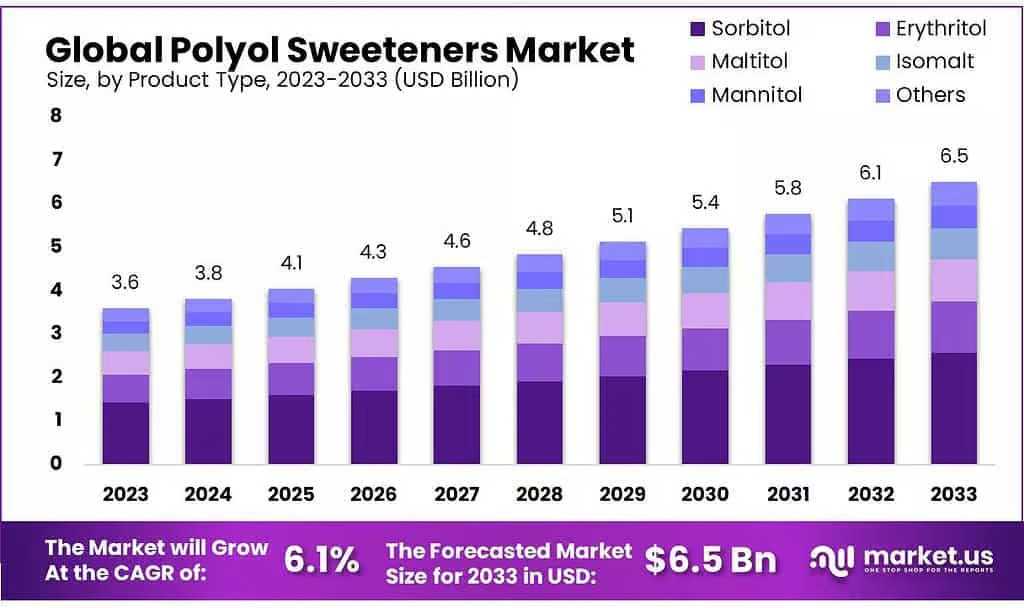
The global polyol sweeteners market is projected to grow from USD 3.6 billion in 2023 to approximately USD 6.5 billion by 2033, reflecting a steady compound annual growth rate (CAGR) of 6.1% over the forecast period from 2023 to 2033.

Key Takeaways:

Market Growth Projection: The Polyol Sweeteners Market is projected to reach around USD 6.5 billion by 2033, growing from USD 3.6 billion in 2023, at a steady CAGR of 6.1% during 2023-2033.
Market Leaders: Sorbitol dominates with a 39.7% share in the market due to its widespread use in various food and beverage products, driven by lower caloric intake and dental health benefits.
Application Diversity: These sweeteners find applications beyond food and beverages, extending to personal care, pharmaceuticals, and industrial uses like paints, coatings, and textiles.
Form Preferences: Powder/Crystal form holds over 72.3% of the share due to ease of use, versatility across industries, longer shelf life, and suitability for various manufacturing processes.
Function Significance: Flavoring and sweetening Agents lead with 52.6% market share, playing a crucial role in enhancing taste profiles without the drawbacks of regular sugar.
Regional Dynamics: North America currently holds the highest revenue share at over 44.6%, but the fastest growth rate is expected in the Asia Pacific due to increased purchasing power and rising demand for sugar-free products.


Exclusive Download Sample Of This Premium Report:

https://market.us/report/polyo....l-sweeteners-market/

Key Market Segments:
By Product
Sorbitol
Xylitol
Mannitol
Maltitol
Isomalt
Other Products
By Form
Powder
Liquid
By Function
Flavoring & Sweetening Agents
Excipients
Bulking Agents
Humectants
Other Functions
By Application
Food & Beverages
Personal Care & Cosmetics
Pharmaceuticals
Other Applications
Drivers

Consumers today are more aware of the downsides of sugar, including its link to obesity, diabetes, and dental issues. That mindset is fueling demand for alternatives like polyols, which provide sweetness without blood sugar spikes. These ingredients also deliver functional benefits such as texture and shelf-life improvement which makes them doubly appealing to food and drink innovators.

Restraining Factors

Despite their benefits, polyols bring challenges. Digestive discomfort, particularly at higher doses, can limit welcome in mainstream diets . They also tend to cost more than sugar, which can deter use in low-cost food segments . Plus, a growing interest in “natural” sweeteners like stevia may draw attention away from polyols on ingredient labels.

Opportunities

The food and beverage industry offers the biggest payoff: from sugar-free confectionery and baked goods to diet-friendly beverages. Beyond that, polyols are finding homes in personal care, pharmaceuticals (as excipients), and industrial uses like coatings and textiles.

Trends

Polyol sweeteners are evolving quickly, driven by health-conscious consumers and innovation in production techniques. Demand is rising for clean-label, plant-based polyols sourced from natural origins like birch, corn, and fruits especially erythritol and xylitol highlighting consumer eagerness for transparent, sustainable ingredients. As clean-label trends continue, manufacturers are crafting polyol blends that offer better sweetness with fewer digestive issues, enhancing overall consumer experience.

Market Key Players:
Cargill
Archer Daniels Midland
Dupont
Roquette Freres
Tereos Starch & Sweeteners
Sudzucker
Ingredion
Jungbunzlauer Suisse
Gulshan Polyols
Batory Foods
B Food Science
Dfi
Sweeteners Plus Inc.
Conclusion

The polyol sweeteners market is on a strong growth path, driven by health, innovation, and evolving consumer preferences. With its value expected to nearly double by 2033, sugar alcohols are proving their versatility not just sweetening foods and drinks, but also enhancing oral care, pharmaceuticals, and industrial products.

However, balancing cost, consumer comfort, and label perceptions will be key. Polyols must continue evolving through taste improvements, digestibility research, and strategic region-specific expansion to cement their role in tomorrow’s health-driven food and wellness landscape.

image
Like
Comment
Share
Anuja profile picture
Anuja
30 week ago

Biodegradable Polymers Industry Expansion | Global Forecast
Report Overview:

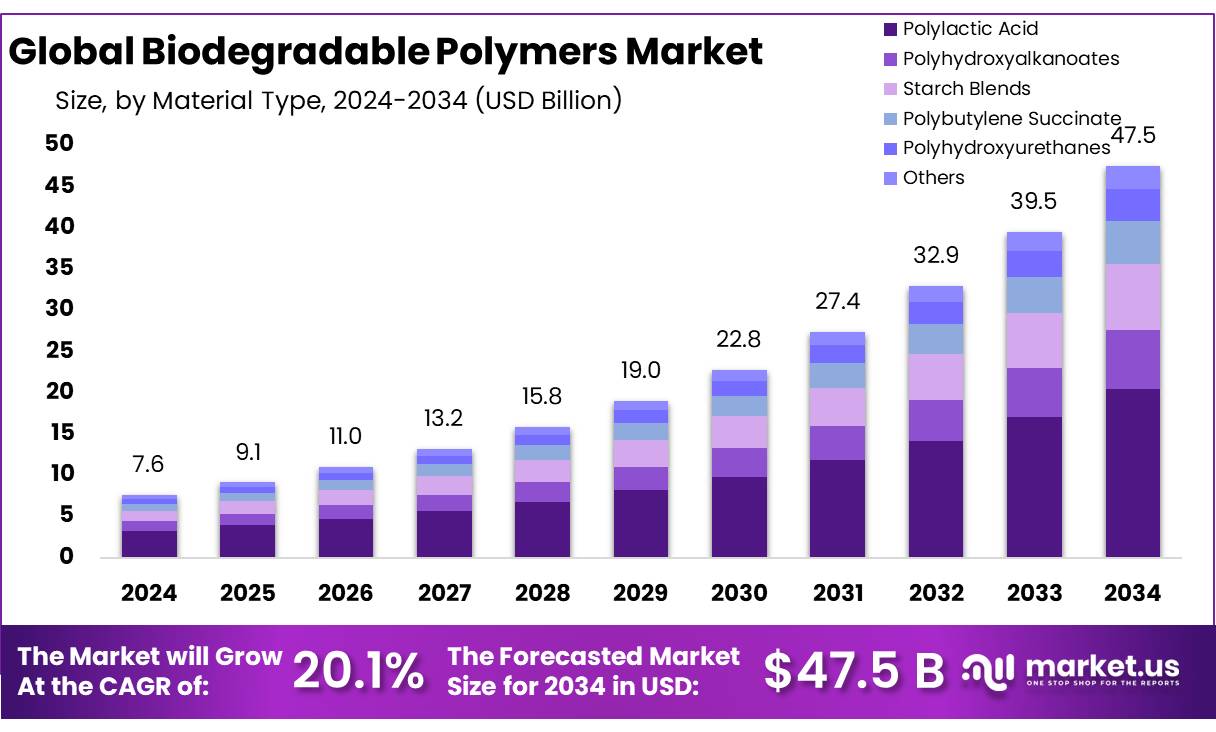
The global biodegradable polymers market is projected to grow significantly, reaching approximately USD 47.5 billion by 2034, up from USD 7.6 billion in 2024. This growth reflects a robust compound annual growth rate (CAGR) of 20.1% during the forecast period from 2025 to 2034.

Adoption is accelerating as environmental concerns intensify and regulations clamp down on single-use plastics. Consumers, brands, and governments alike are favoring materials that biodegrade in composting facilities or natural environments. This shift aligns with broader sustainability goals, reducing landfill waste and mitigating ocean pollution.

Key Takeaways:

Biodegradable Polymers Market size is expected to be worth around USD 47.5 Billion by 2034, from USD 7.6 Billion in 2024, growing at a CAGR of 20.1%.
Polylactic Acid (PLA) held a dominant market position, capturing more than a 43.1% share of the biodegradable polymers market.
Packaging held a dominant market position, capturing more than a 56.6% share of the biodegradable polymers market.
Asia-Pacific (APAC) region emerged as the dominant player in the biodegradable polymers market, capturing a significant share of 36.2%, valued at approximately USD 2.7 billion.

Download Exclusive Sample Of This Premium Report:

https://market.us/report/globa....l-biodegradable-poly

Key Market Segments:
By Material Type
Polylactic Acid
Polyhydroxyalkanoates
Starch Blends
Polybutylene Succinate
Polyhydroxyurethanes
Others
By Application
Packaging
Agriculture
Medical
Consumer Goods
Textile
Others
Drivers

The main engine behind this market's growth is rising environmental awareness with global initiatives like plastic bag bans and landfill reduction targets and corporate commitments to reduce plastic waste. Stringent regulations, such as the EU's Circular Economy Action Plan, are pushing businesses toward materials that are compostable or biodegradable by design.

Restraining Factors

Higher production costs Manufacturing biodegradable polymers typically costs 30–50% more than making conventional plastics. This stems from pricier feedstocks (like corn, sugarcane, or plant oils), specialized processing, and smaller-scale production setups.

Opportunities

There’s strong potential in sustainable packaging, with 56% of polymer demand coming from that sector. Growing markets like agricultural mulch films, compostable tableware, and medical implants offer new application fields. Technological innovation, such as coatings that biodegrade faster or microbes that enhance composting, can drive cost reductions and performance improvements

Trends

Biodegradable polymers are evolving rapidly, driven by demand for eco-friendly solutions and ongoing advances in material science. PLA holds the largest market share, especially in packaging, due to its compostability and ease of use. Starch-based blends are also becoming more popular, offering a cost-effective choice for agricultural films, disposable cutlery, and food containers especially when treated to improve strength and moisture resistance.

Market Key Players:
BASF
Biome Technologies
Borealis Group
Changsu
Corbion
Danimer Scientific
Evonik Industries AG
FKUR
Jiangmen Xinshuo New Materials Co., Ltd
Kaneka
Mitsubishi Chemical Group Corporation.
NatureWorks LLC
NaturTec
Novamont S.p.A.
Polysciences
Polysciences Inc
TotalEnergies
Conclusion

The biodegradable polymers market stands at an exciting tipping point. Its rapid growth mirrors a global shift toward more sustainable materials, supported by strong policy action and consumer preference. With PLA and starch-based polymers leading the charge, the market is expanding across multiple industries from packaging to agriculture and healthcare.

Nonetheless, rising costs and the need for reliable end-of-life infrastructure remain key barriers. To unlock full potential, companies and regulators must invest in cost-effective production, robust composting systems, and transparent labeling.

Biodegradable Polymers Market Size, Share | CAGR of 20.1%
market.us

Biodegradable Polymers Market Size, Share | CAGR of 20.1%

Biodegradable Polymers Market size is expected to be worth around USD 47.5 Billion by 2034, from USD 7.6 Billion in 2024, at a CAGR of 20.1%
Like
Comment
Share
Anuja profile picture
Anuja
30 week ago

Polymeric Concrete Industry Growth: Applications & Drivers

Report Overview:

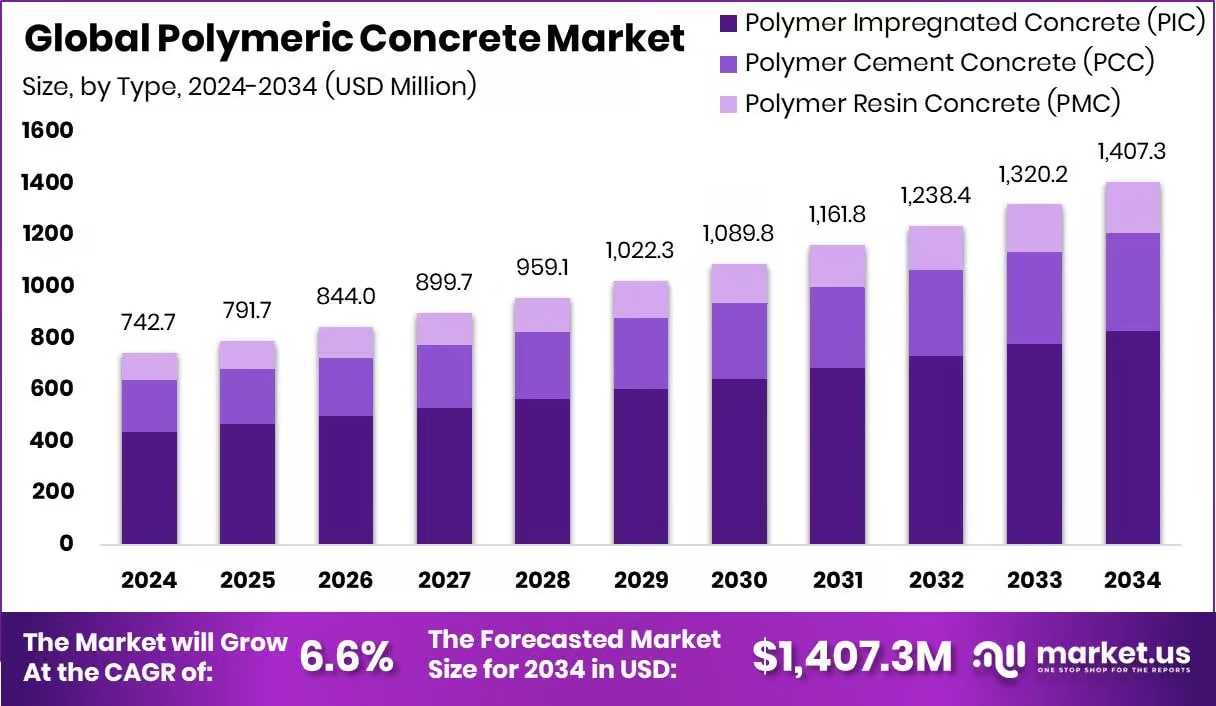
The global polymeric concrete market is projected to reach approximately USD 1,407.3 million by 2034, rising from USD 742.7 million in 2024, with a CAGR of 6.6% between 2025 and 2034. North America currently leads the market with a value of USD 320.8 million, accounting for 43.2% of global demand.

Polymeric concrete is becoming a preferred material in industries that demand high strength, chemical resistance, and durability. Unlike traditional concrete, it uses polymer binders, which provide enhanced performance in extreme environments such as industrial flooring, drainage systems, and marine construction.

Key Takeaways:

Global Polymeric Concrete Market is expected to be worth around USD 1,407.3 million by 2034, up from USD 742.7 million in 2024, and grow at a CAGR of 6.6% from 2025 to 2034.
Polymer Impregnated Concrete (PIC) dominates with a 59.3% market share due to superior durability.
Epoxy-based polymeric concrete holds 37.7% of the market, favored for its strong adhesive properties.
Flooring blocks, comprising 28.5% of applications, are increasingly chosen for their resilience and longevity.
The industrial sector, as the largest end-use area, utilizes 34.6% of polymeric concrete for infrastructure.
Strong infrastructure spending drives North America’s 43.2% market share, totaling USD 320.8 Mn.


Download Exclusive Sample Of This Premium Report:

https://market.us/report/polym....eric-concrete-market

Key Market Segments:
By Type
Polymer Impregnated Concrete (PIC)
Polymer Cement Concrete (PCC)
Polymer Resin Concrete (PMC)
By Polymer Type
Epoxy
Polyester
Furan
Vinylester
Latex
Acrylate
Methyl Methacrylate
Others
By Application
Flooring Blocks
Facade and Curtain Wall
Pump Bases
Chemical Containments
Waste Containers
Trench Drains
Others
By End-use
Industrial
Municipal
Residential
Commercial
Infrastructure
Drivers

A major driver behind the polymeric concrete market's growth is the increasing demand for materials that can withstand harsh conditions. Its superior resistance to chemicals, water, and environmental stress makes it ideal for wastewater plants, tunnels, bridges, and industrial plants. Governments and industries are also pushing for materials that offer long-term performance with minimal maintenance, making polymeric concrete a viable option.

Restraining Factors

One of the main barriers for polymeric concrete is the high cost of raw materials. The specialized synthetic resins and polymers required such as epoxy come at a significant premium compared to traditional cement and aggregates. This pushes up the overall price of polymeric concrete, making it less attractive for budget-conscious builders and cost-sensitive projects

Opportunities

Emerging economies present substantial opportunities for market growth, especially where urbanization and infrastructure development are priorities. There's also rising demand in niche applications like chemical containment, airport runways, and marine ports. Innovations in bio-based polymers and advancements in resin technology could further reduce costs and expand the material’s appeal in cost-sensitive markets.

Trends

A notable trend in this market is the growing use of precast polymeric concrete components. These prefabricated elements reduce on-site work and improve construction speed.

There's also a movement toward developing eco-friendly polymer formulations that reduce emissions. As cities invest more in sustainable and smart infrastructure, the role of advanced building materials like polymeric concrete is gaining more prominence.

Market Key Players:
Interplastic Corporation
ULMA Architectural Solutions
BASF SE
ACO FUNKI A/S
Polycare Namibia
Sika AG
Dudick Inc.
Forté Composites
Kwik Bond Polymers
Lidco Building Technologies
ErgonArmor
TPP Manufacturing Sdn. Bhd
Carborundum Universal Limited
ACO
MEA Group
Other Key Players
Conclusion
The polymeric concrete market holds strong potential in the coming decade. As the construction industry modernizes, the demand for high-performance, long-lasting materials is increasing. Polymeric concrete, with its ability to withstand extreme environments, is positioned as a reliable solution across many sectors.


However, broader adoption will depend on addressing cost barriers, improving awareness, and making the technology more accessible. With continuous innovations and supportive infrastructure investments, polymeric concrete could play a pivotal role in the future of sustainable and resilient construction worldwide.

image
Like
Comment
Share
Anuja profile picture
Anuja
31 week ago

Global PHB Market Insights | Applications, Growth, and Forecast
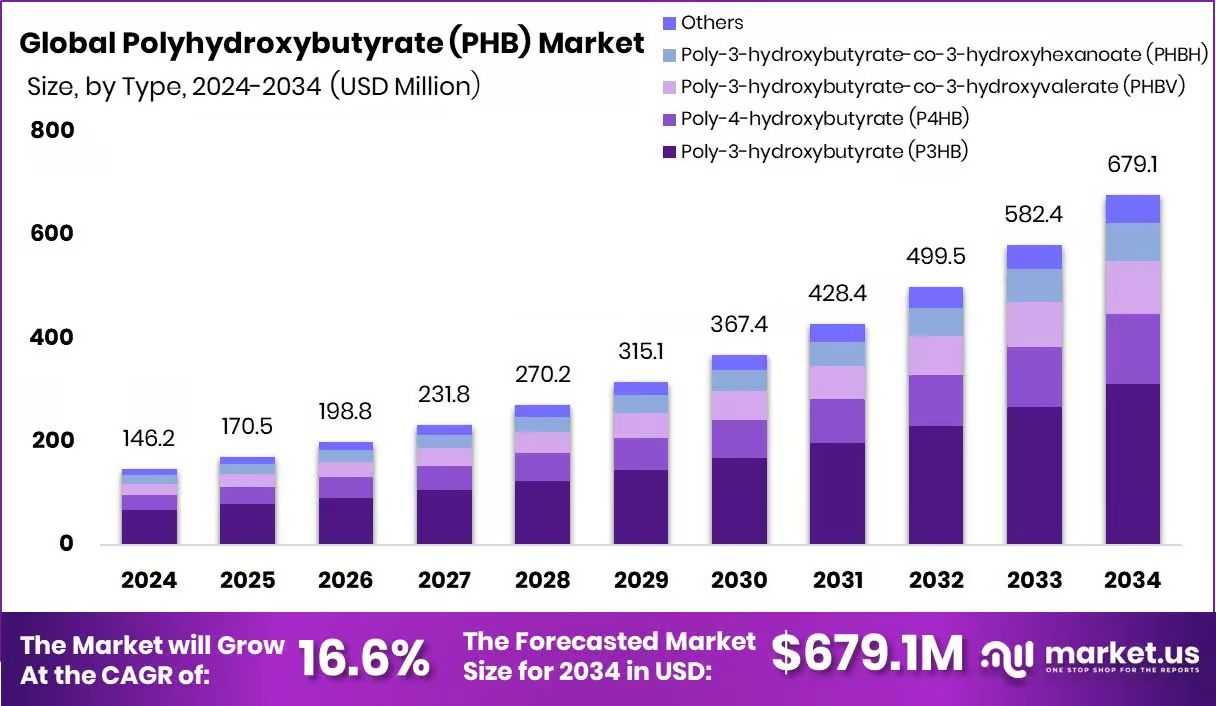
The global Polyhydroxybutyrate (PH market is projected to reach approximately USD 679.1 million by 2034, rising significantly from USD 146.2 million in 2024. This growth represents a robust compound annual growth rate (CAGR) of 16.6% between 2025 and 2034. The Asia Pacific region leads the market, accounting for a dominant 46.2% share, driven by increasing demand for biodegradable plastics across various industrial sectors.
Download Exclusive Sample Of This Premium Report:

https://market.us/report/polyh....ydroxybutyrate-phb-m

image
Like
Comment
Share
 Load more posts
    Info
  • 7 posts

  • Female
    Albums 
    (0)
    Friends 
    (0)
    Likes 
    (14)
  • Arsenal Now
    Enagpur
    Arsenal Tv
    Radio Wall
    Bernd Leno
    Dave Mustaine
    Shops2Home
    Armin van Buuren
    Budding-Wall
    Groups 
    (0)

© 2026 Maanation

Language

  • About
  • Directory
  • Blog
  • Contact Us
  • More
    • Privacy Policy
    • Terms of Use

Unfriend

Are you sure you want to unfriend?

Report this User

Important!

Are you sure that you want to remove this member from your family?

You have poked Anuja

New member was successfully added to your family list!

Crop your avatar

avatar

© 2026 Maanation

  • Home
  • About
  • Contact Us
  • Privacy Policy
  • Terms of Use
  • Blog
  • Language

© 2026 Maanation

  • Home
  • About
  • Contact Us
  • Privacy Policy
  • Terms of Use
  • Blog
  • Language

Comment reported successfully.

Post was successfully added to your timeline!

You have reached your limit of 5000 friends!

File size error: The file exceeds allowed the limit (92 MB) and can not be uploaded.

Your video is being processed, We’ll let you know when it's ready to view.

Unable to upload a file: This file type is not supported.

We have detected some adult content on the image you uploaded, therefore we have declined your upload process.

Share post on a group

Share to a page

Share to user

Your post was submitted, we will review your content soon.

To upload images, videos, and audio files, you have to upgrade to pro member. Upgrade To Pro

Edit Offer

0%

Add tier


Select an image
Delete your tier
Are you sure you want to delete this tier?

Reviews

Pay By Wallet

Delete your address

Are you sure you want to delete this address?

Payment Alert

You are about to purchase the items, do you want to proceed?
Request a Refund

Language

  • English